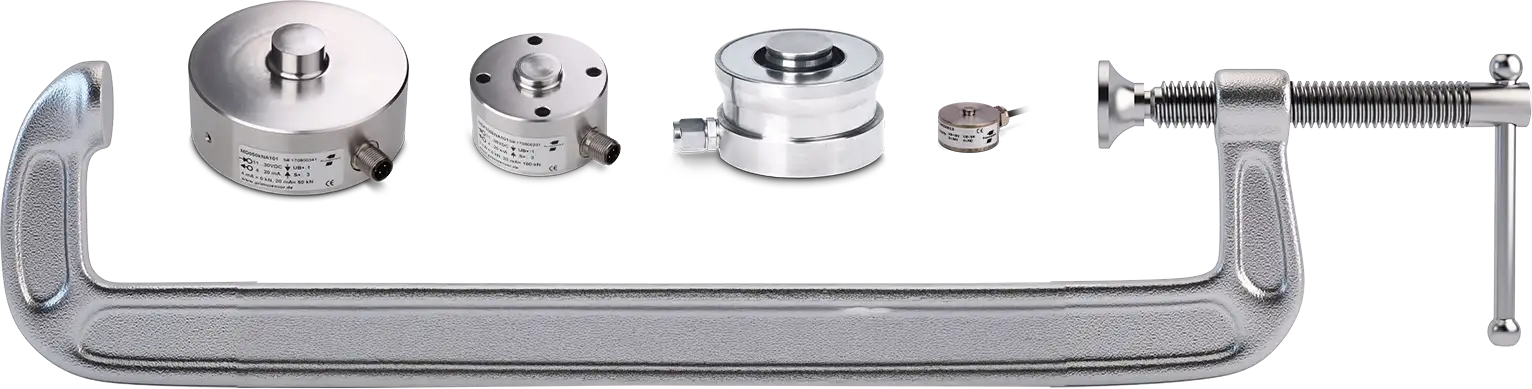
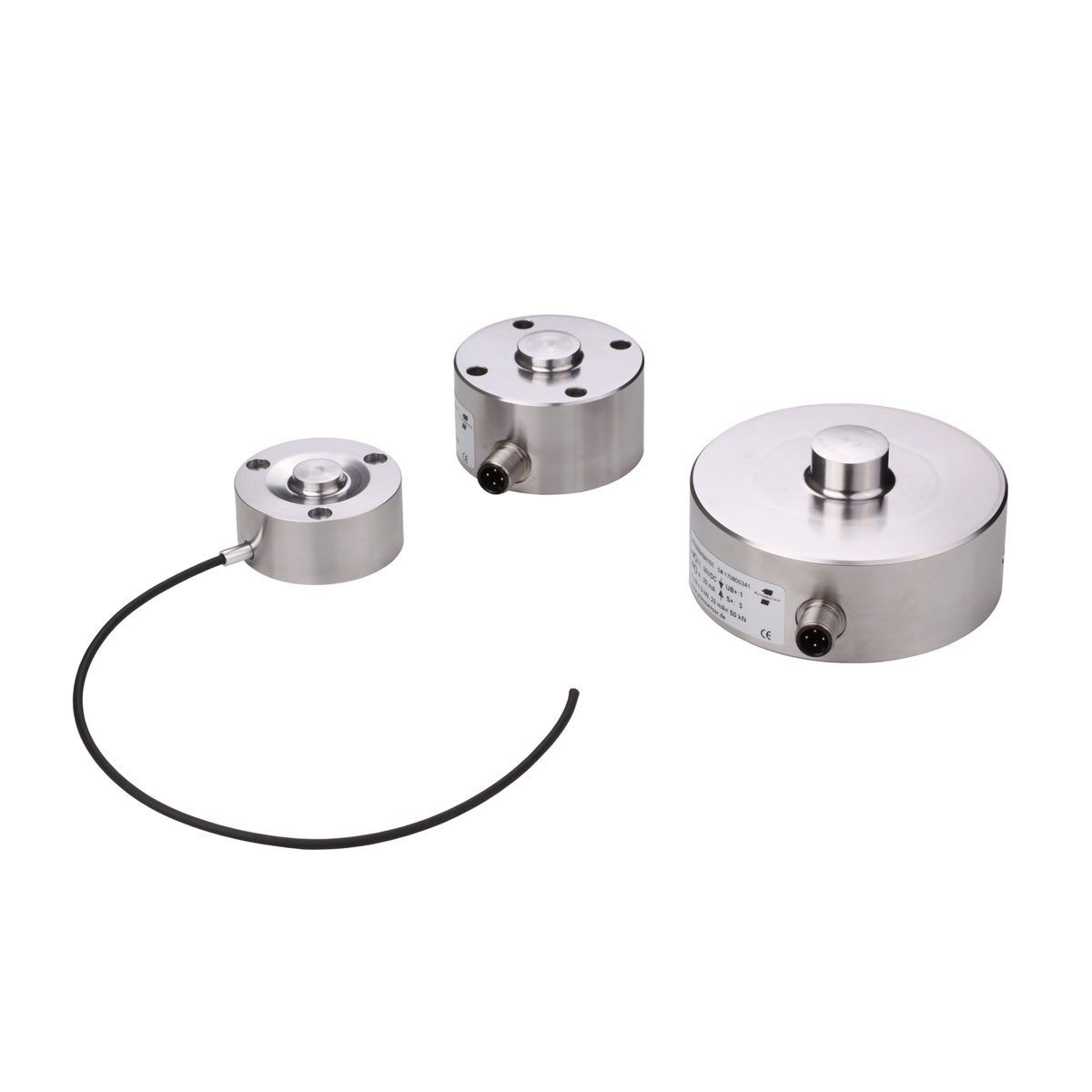
The design commonly referred to as a “load cell” is typically a cylindrical compression force transducer with a spherical cap (“load button”) mounted on the top for controlled force application. It is usually based on strain gauges, which convert even the smallest deformations into electrical signals. Unlike other force sensors, it stands out for its robust, space-saving design. Typical applications include mechanical engineering, test benches, and automation.
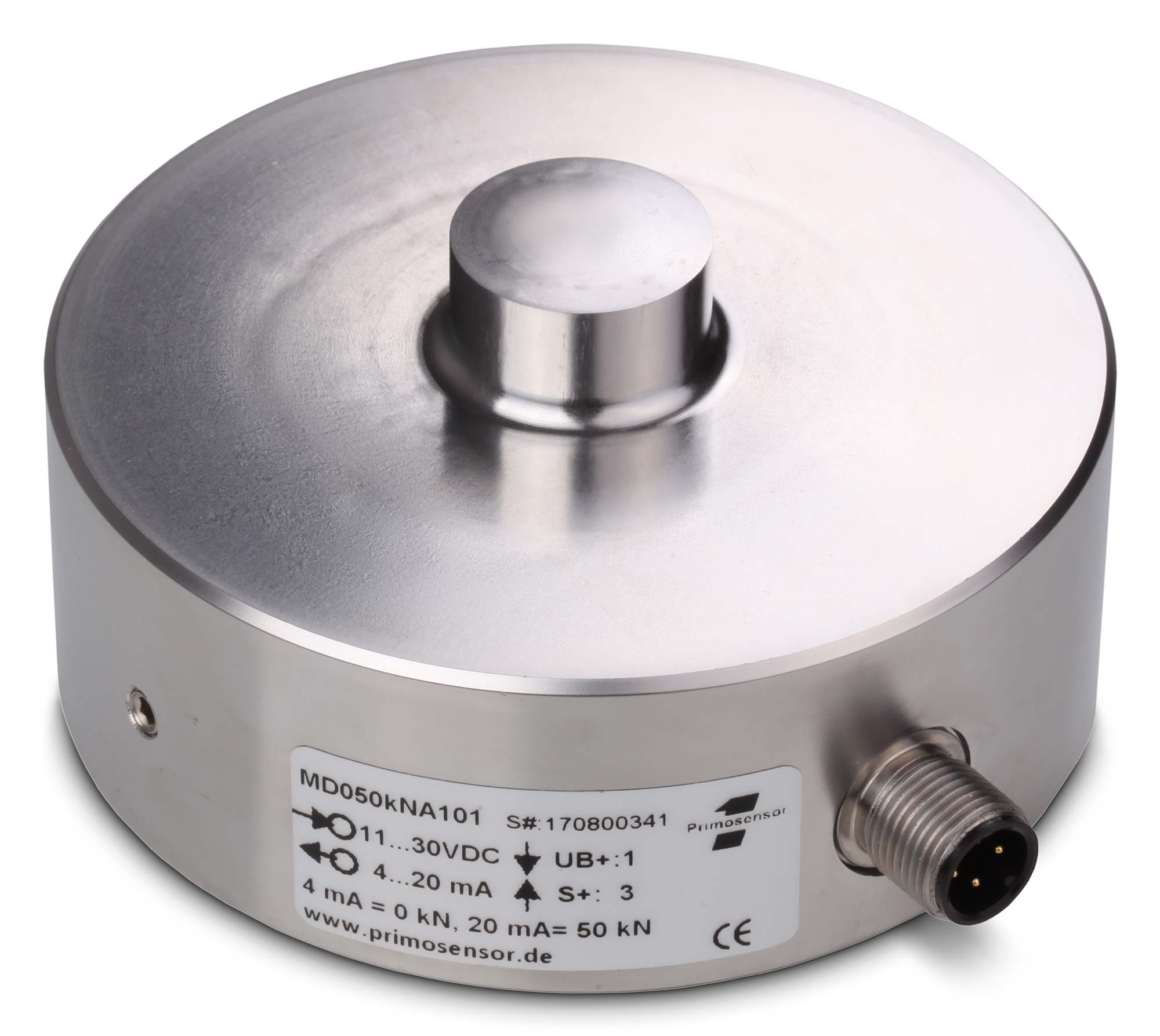
5 kN … 50 kN – Ø 94 mm – Height 35.5 mm 100 kN, 200 kN – Ø 114 mm – Height 47.5 mm
The load cells measure static and dynamic forces. Available in two sizes, they cover nominal loads ranging from 5 kN to 200 kN. Threaded holes in the base facilitate installation. The force is applied via a domed surface in the center.
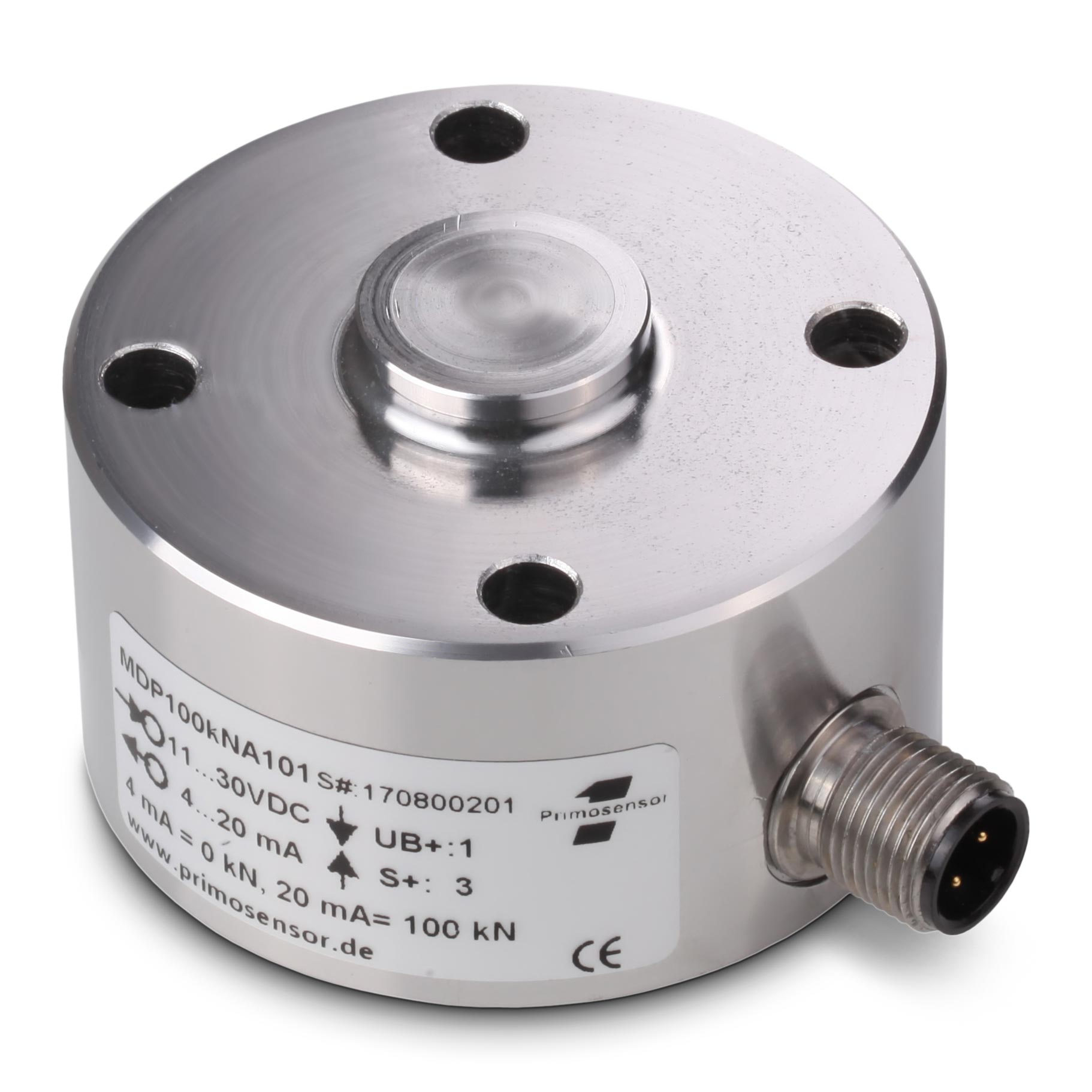
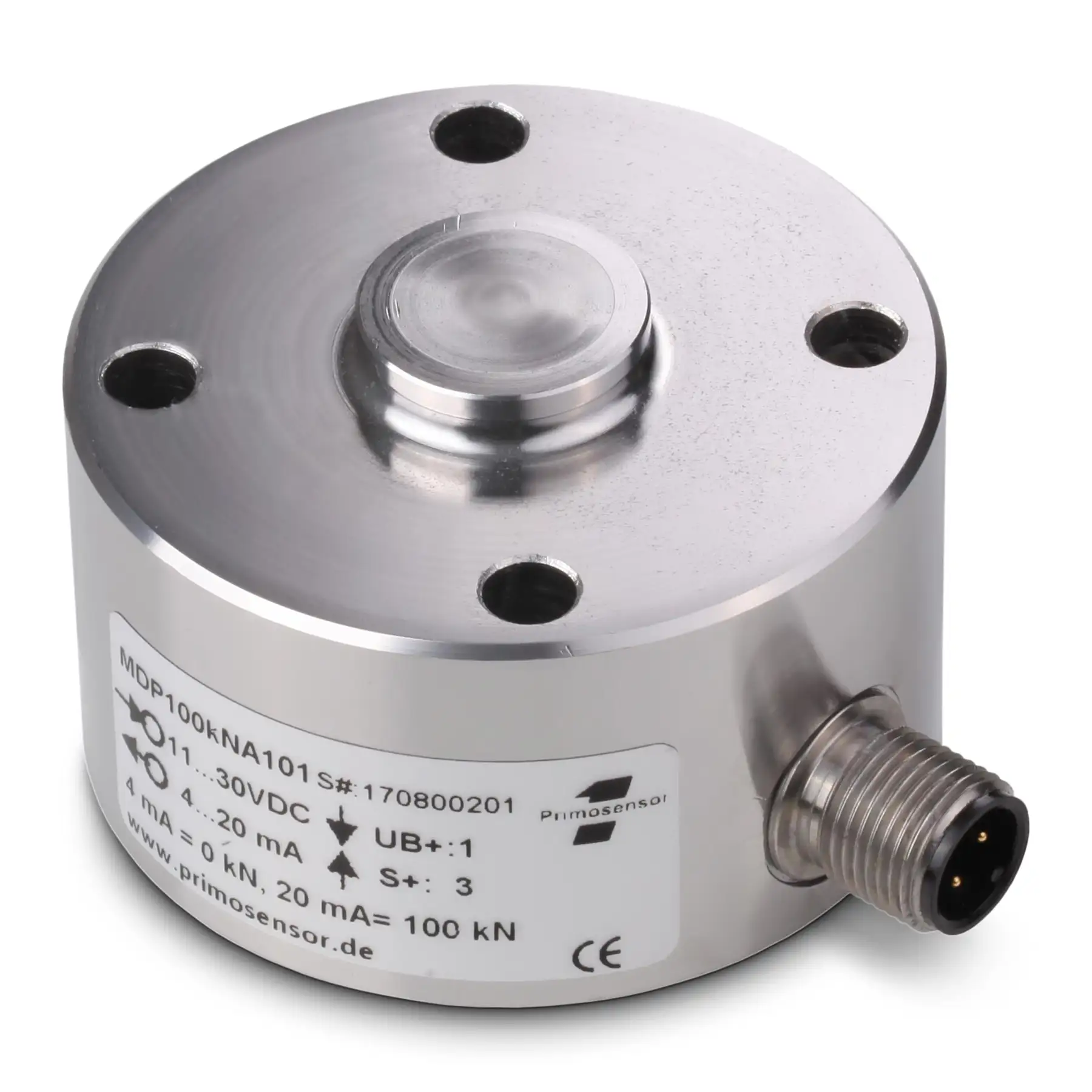
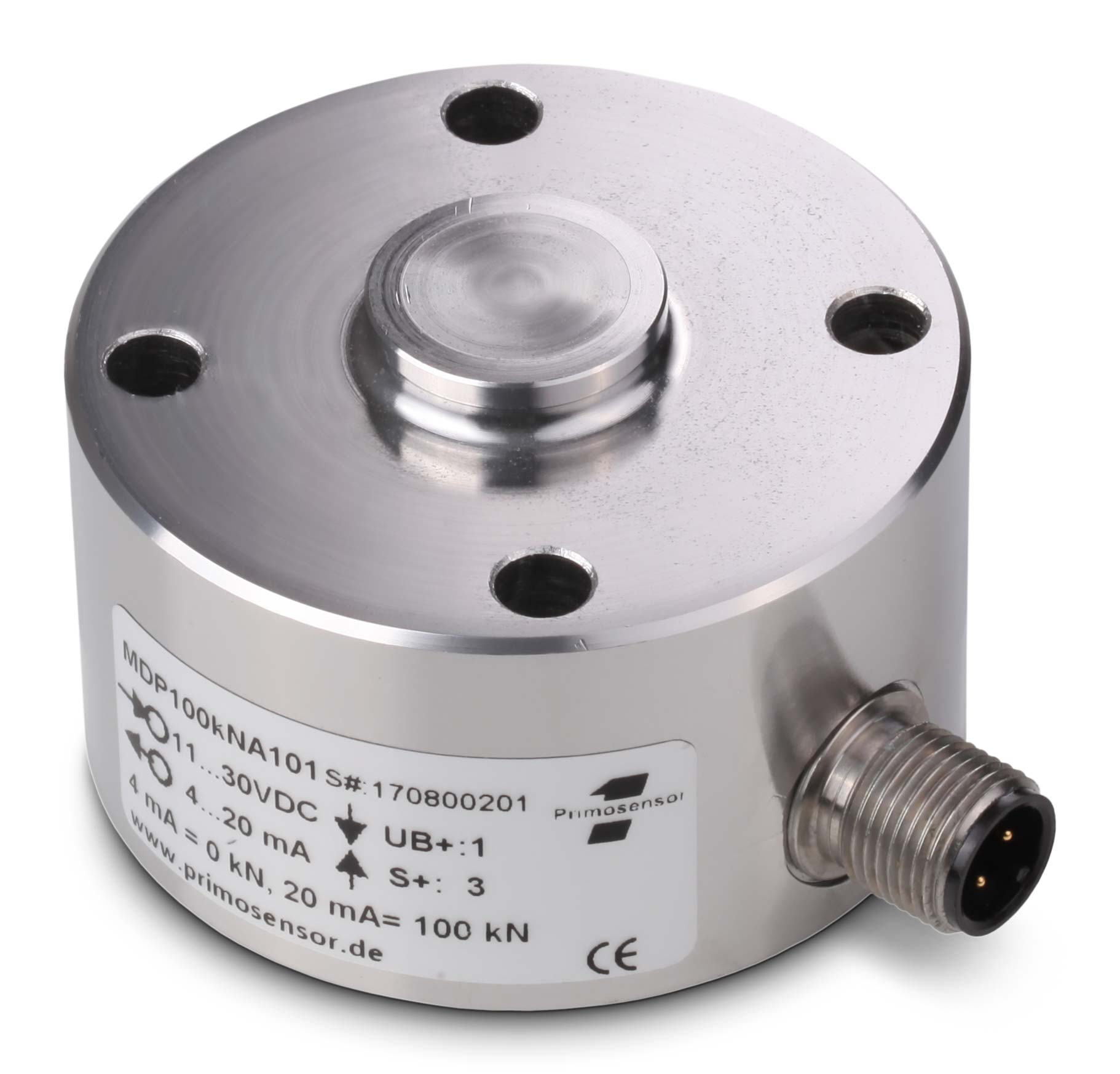
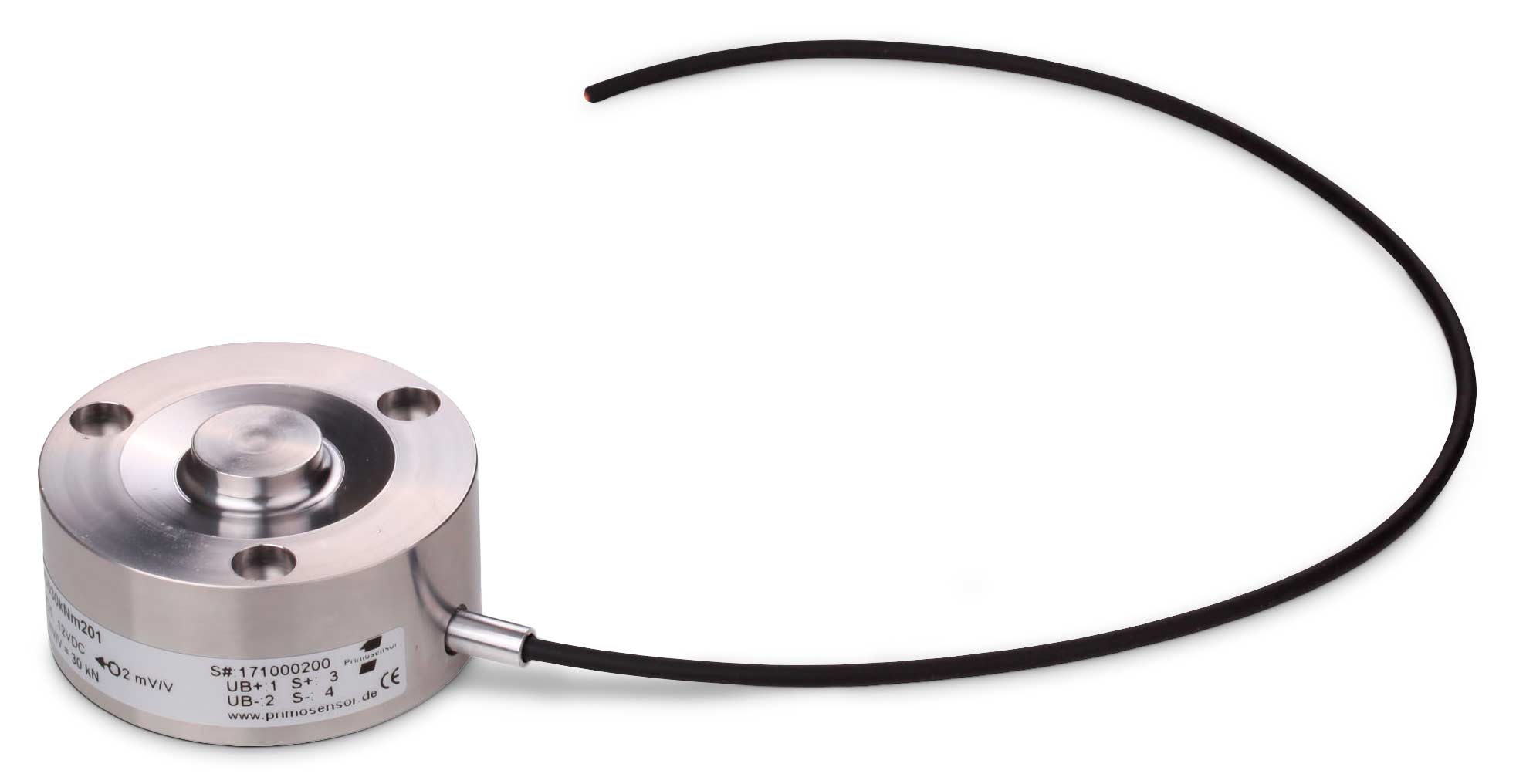
Type 1 – Ø 45 mm – Height 26 mm Type 2 – Ø 60 mm – Height 38 mm
The load cells measure static and dynamic forces. Available in two sizes, they cover nominal loads ranging from 500 N to 100 kN. Through-holes facilitate installation. The force is applied via a spherical surface in the center.
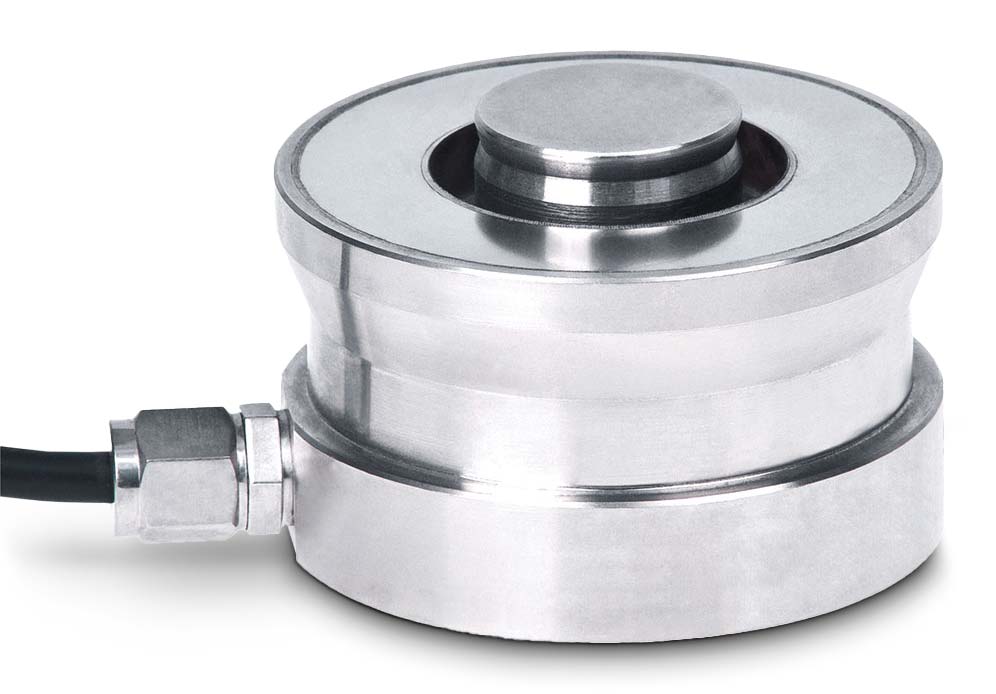
200 kN – Ø 75 mm – Height 50 mm 300 kN – Ø 95 mm – Height 65 mm 500 kN – Ø 130 mm – Height 85 mm
The force transducers (bending ring) measure static and dynamic forces. With two sizes available, they cover applications with rated loads ranging from 100 to 500 kN. A threaded hole in the base facilitates installation. The force is applied via a flat surface in the center using the corresponding mating part.
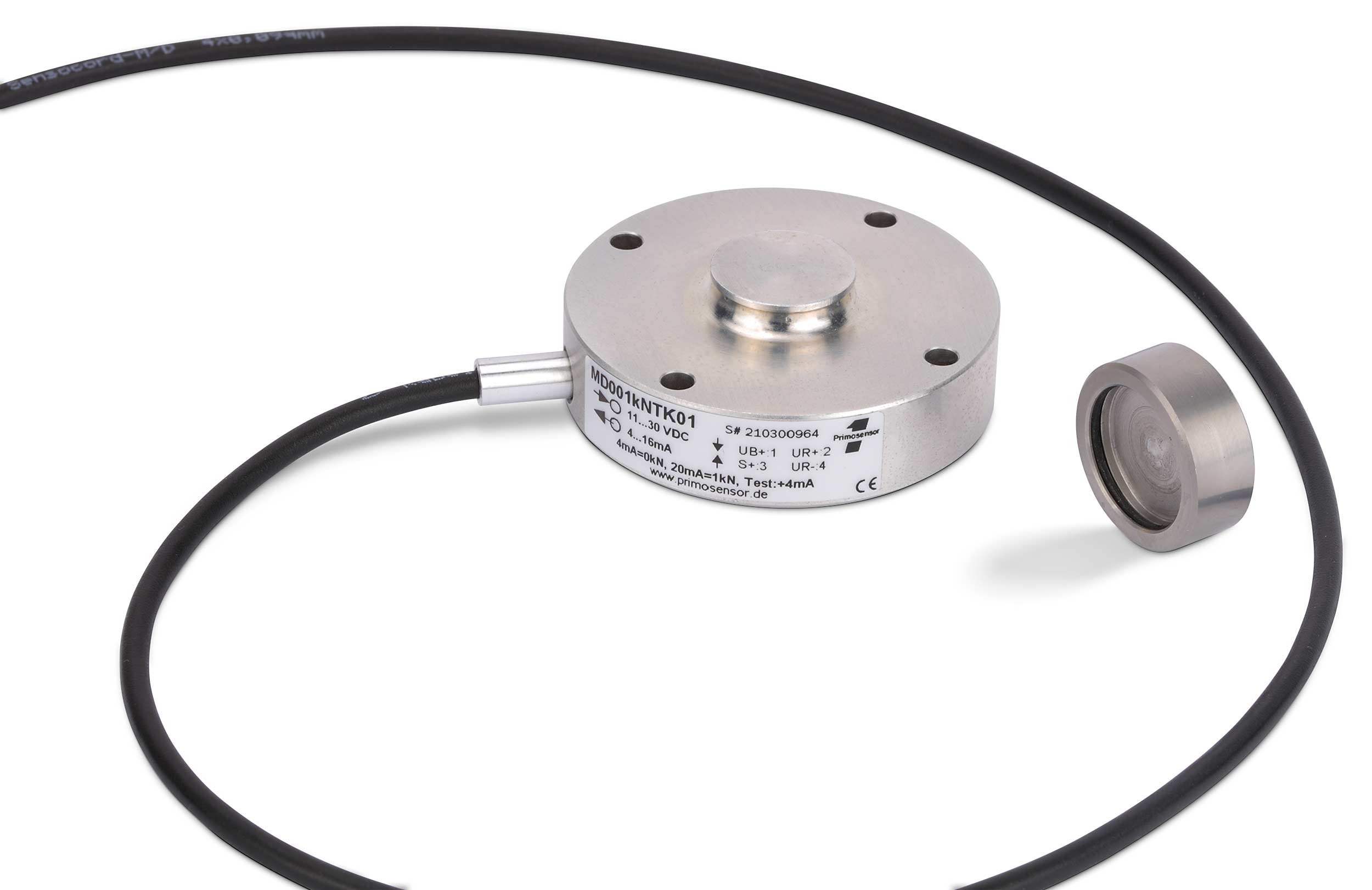
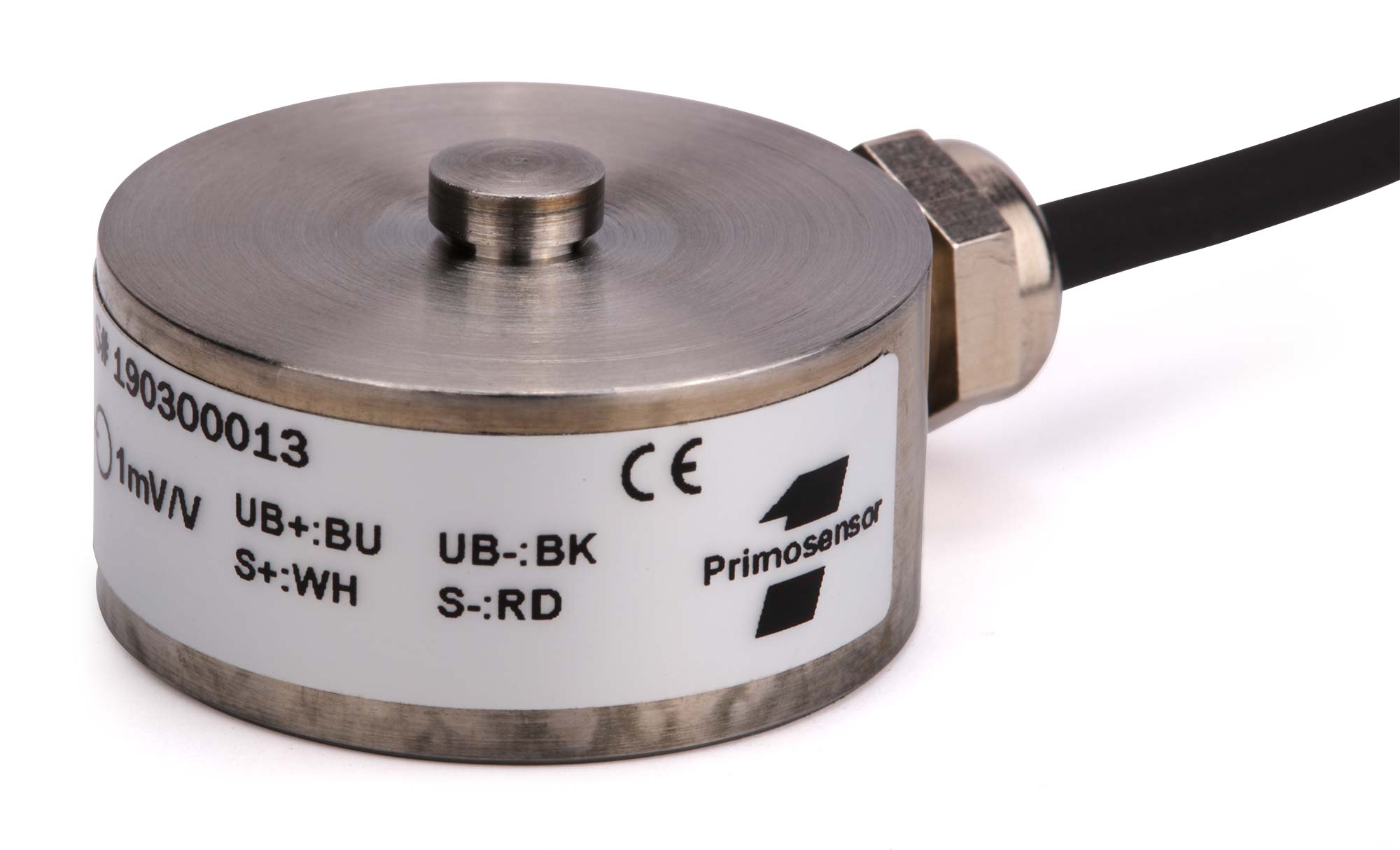
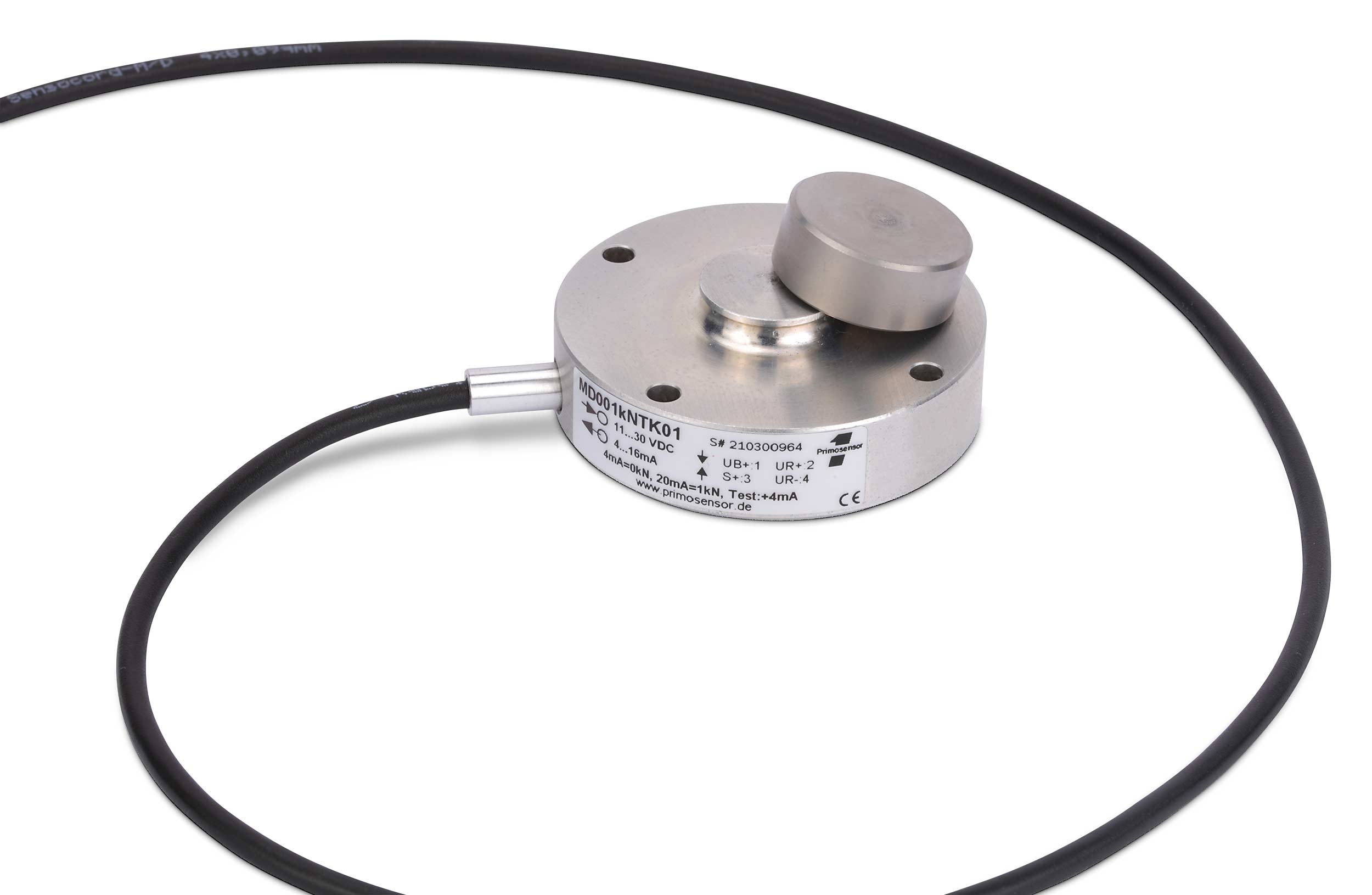
Type 1 0.5 kN … 20 kN – Ø 26 mm – Height 13 mm Type 2 1 kN, 5 kN – Ø 15 mm – Height 10 mm
These force transducers are characterised by their small sizes which makes them perfect for installation in narrow spaces. They need only a flat surface as a base. Force is introduced via a convex area in the centre that does not mind minor tilting. Fixing holes (only for type 1) on the underside provide secure fixing in the application.
A load cell in the form of a (cylindrical) compressive force transducer, with a spherical dome on the top for force application, measures compressive forces through the deformation of its sensitive measuring element. The force is transmitted via the annular geometry on the bottom. To achieve optimal accuracy, the sensor should therefore rest on a flat, level surface and, if mounting holes are present, be securely bolted in place. This allows forces to be measured precisely and reliably—even in dynamic processes or under harsh environmental conditions.
Differences from Other Force Sensors
Compared to beam- or S-shaped force sensors, this design is characterized by its particularly compact and robust construction. It is especially well-suited for applications with limited installation space and high loads. While other sensor geometries can often measure both tensile and compressive forces, force transducers are primarily designed for measuring compressive forces. This allows them to achieve high measurement accuracy while maintaining a compact design.
Typical Applications
Force transducers are used in mechanical and plant engineering, on test benches, in assembly presses, and in material handling systems. They are used wherever forces need to be monitored reliably, continuously, and precisely—even under challenging conditions such as vibration, heat, or dirt.
Thanks to their small, cylindrical design, load cells can be easily integrated even in tight or hard-to-reach areas. They take up very little space and are ideal for compact machines or applications with limited installation space—without compromising on stability or performance.
High measurement accuracy and linearity
Force transducers provide extremely precise measurements across the entire measurement range. Their high linearity ensures that the force is measured in direct proportion to the output signal. This allows forces to be precisely monitored and controlled—a critical factor for quality, process reliability, and reproducible results in sensitive applications.
Protection ratings (up to IP68) for industrial environments
Depending on the model, load cells are available with protection ratings up to IP68 , with IP67 is the common standard in many industrial applications. The high protection rating ensures complete protection against dust ingress as well as reliable protection against water. This makes load cells suitable for use in harsh industrial environments with moisture, dirt, or regular cleaning processes. The robust, sealed design contributes to high operational reliability, a long service life, and consistently reliable measurement accuracy.
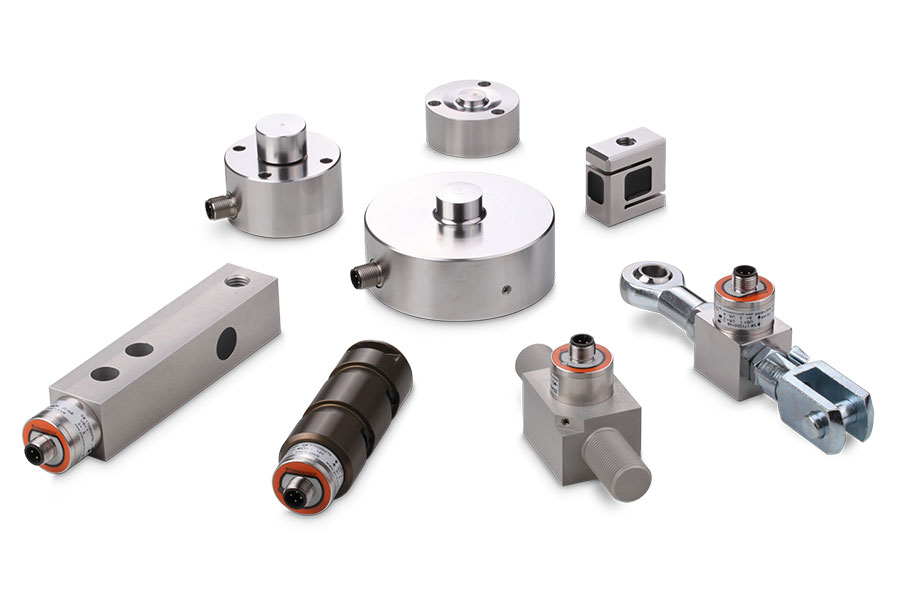
Force transducers are available in a wide variety of models—ranging from those designed for very small forces in the Newton range to sensors for extreme loads in the meganewton range. This allows them to be flexibly adapted to a wide variety of applications—from micro-precision to heavy-duty technology.
You decide!
Custom modifications are possible at any time for force transducers / pressure transducers.
Do you need a load cell tailored to your needs? No problem!
Whether shape or design, material or ports, analog or digital output signals – our team develops the load cell you need, single-handedly or in cooperation with your team. Our staff has not only the know-how and years of experience in developing force measuring technology but also the required tools and machines to make the prototype you need.
Examples of customizations for load cells / force transducers that we have developed for our customers:
FAQ
Frequently asked questions
How exactly does a load cell work from a technical standpoint?
A load cell measures forces by detecting the deformation of an elastic sensing element caused by a load. This deformation is usually converted into an electrical signal—which is proportional to the applied force—using strain gauges. The measured values can then be processed and displayed by an evaluation electronics unit.
How do I choose the right load cell for my application?
The selection of the appropriate load cell depends primarily on the requirements of the specific application. Key criteria include the maximum force to be measured and the maximum load that may occur, in order to ensure a sufficient safety margin. Likewise, the available installation conditions or installation space, the required measurement accuracy, the environmental conditions—including the necessary protection rating—and the required output signal must be taken into account.
What accuracy classes are available for load cells?
Accuracies in the range of 0.05% to 0.5% of the full-scale value are typical for load cells designed as compression transducers.
What protection ratings (e.g., IP67) are available, and what do they mean?
Depending on the model, load cells are available with protection ratings of IP65, IP67, or up to IP68. The protection rating describes the sensor’s protection against the ingress of dust and water. High protection ratings enable reliable operation even in harsh industrial environments with moisture, dirt, or regular cleaning processes, and contribute to high operational reliability and a long service life.
Can load cells be used in harsh or humid environments?
Yes, many load cells are specifically designed for use in harsh, humid, or dusty environments. Models with high protection ratings such as IP67 or IP68, as well as corrosion-resistant materials such as stainless steel, ensure reliable operation even under demanding conditions. For special applications or specific environmental conditions, versions made of specialized materials—such as stainless steels with high resistance to saltwater—are also available. Upon request, load cells can also be customized in terms of material selection and design to suit the specific operating conditions.
How is a load cell integrated into an existing system?
When integrating a force transducer into an existing system, consider the possible mechanical connection, particularly the mounting orientation and the available installation space. For the electrical connection, consider the compatibility of the output signal. Primosensor offers various output signals for its force sensors:
mV/V
4…20 mA
0…+/-10V
CANopen
Redundant outputs, e.g., 2 x 4…20 mA
via external evaluation devices and amplifiers, as well as all common digital interfaces and buses (ProfiBus DP, ProfiNet, RS-232/485, Ethernet, Ethernet / EthernetIP / DeviceNet / EtherCAT)
Is regular calibration necessary, and how often should it be performed?
Yes, regular calibration is recommended to ensure the long-term measurement accuracy and reliability of the load cell. In many applications, the calibration interval is one year; however, it may vary depending on operating conditions, frequency of use, and quality requirements.
Receive a free offer
We will inform you about our prices and specifications via e-mail.
Die Präzision bewährter DMS-Kraftmesstechnik trifft ab sofort auf modernste, drahtlose Telemetrie und IoT-Intelligenz. Erleben Sie die Zukunft der industriellen Messdatenerfassung.