Torque transducers and torque measuring rings (sensors)
There are various ways to measure torque in drives, machines, and systems. Torque can be measured directly using torque transducers or torque sensors, or indirectly via a torque arm using a force sensor.
When measuring torque directly using torque sensors, a distinction is made between rotating and non-rotating applications. Primosensor develops and manufactures specialized torque sensors—including custom designs—as well as torque measuring rings and torque measuring flanges, which are mounted between the drive component and the machine frame.
These high-quality sensors, which have long proven themselves in practice, enable the measurement of the powertrain’s reaction torques without rotating themselves. Non-rotating sensors also offer the advantage of being maintenance-free when used as intended and installed properly. Their design makes them very easy to install.
The output signals can be used as measurement data for analyzing load profiles or as a controlled variable in a control system for dynamic applications.
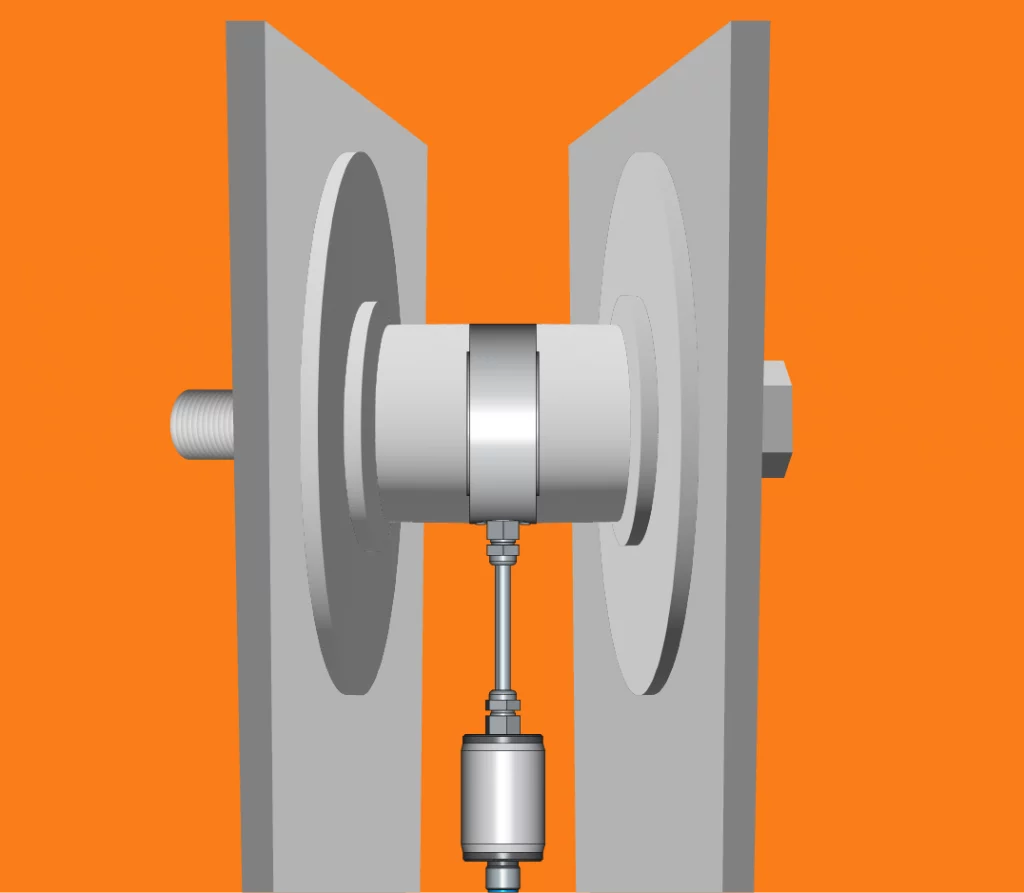
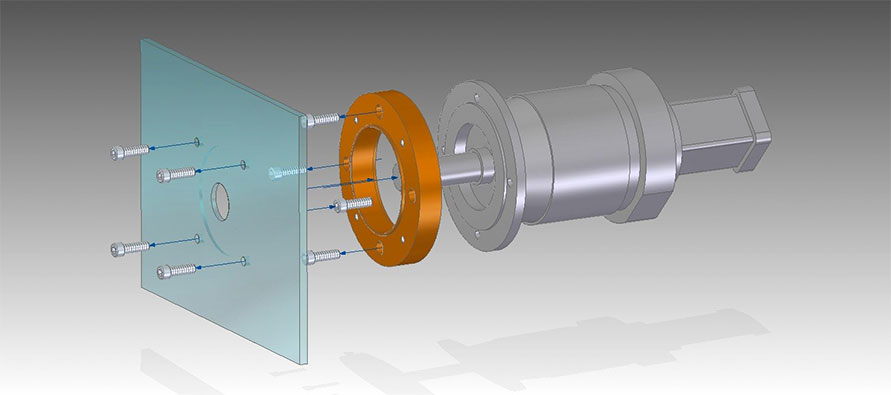
Schematic illustration of a non-rotating torque measurement:
Application sketch from one of our customers showing torque measurement on a tubular shaft tensioning machine:
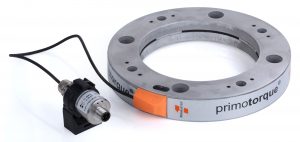
Primotorque®
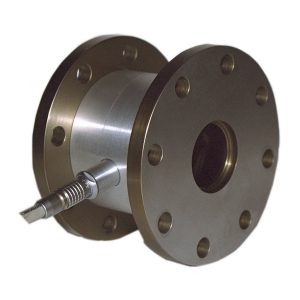
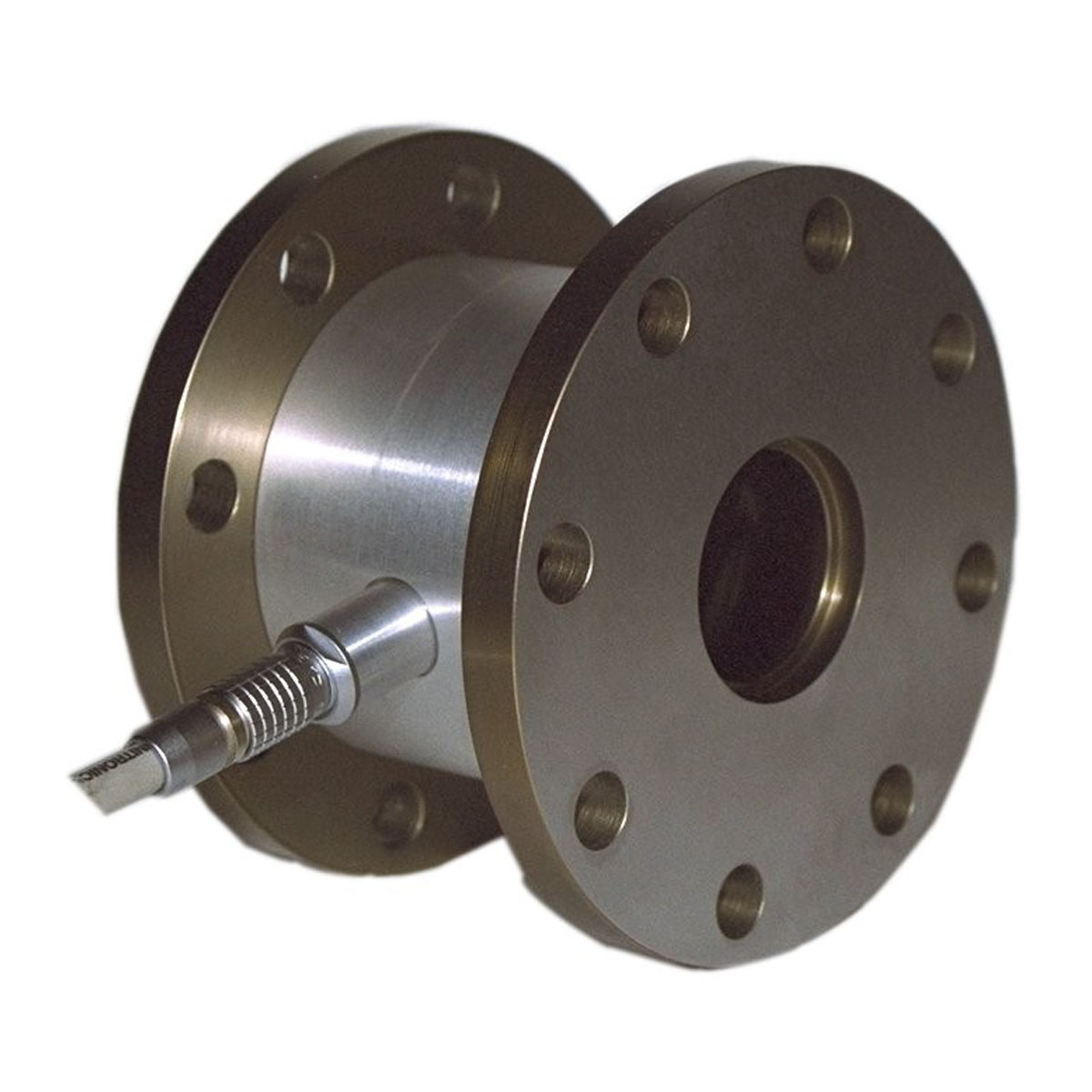
Torque Measuring Flanges
Model: DMA
Torque transducers can be used in versatile applications.
Torque transducers can be used in versatile applications. They are centered by a central recess and mounted via the same sized connecting flanges. A shaft can be fed through the central bore. Thus the transducer can measure reaction moments.
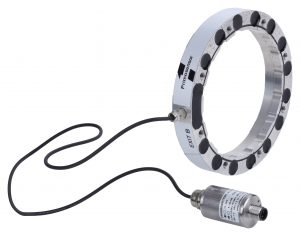
High precision torque measuring rings are available in three sizes for nominal moments from 400 up to 2.600 Nm. The sensors are mounted between drive mechanism and machine frame. They are static, i.e. they do not rotate. The transducers permit a continous measurement of the drive’s reaction moments.
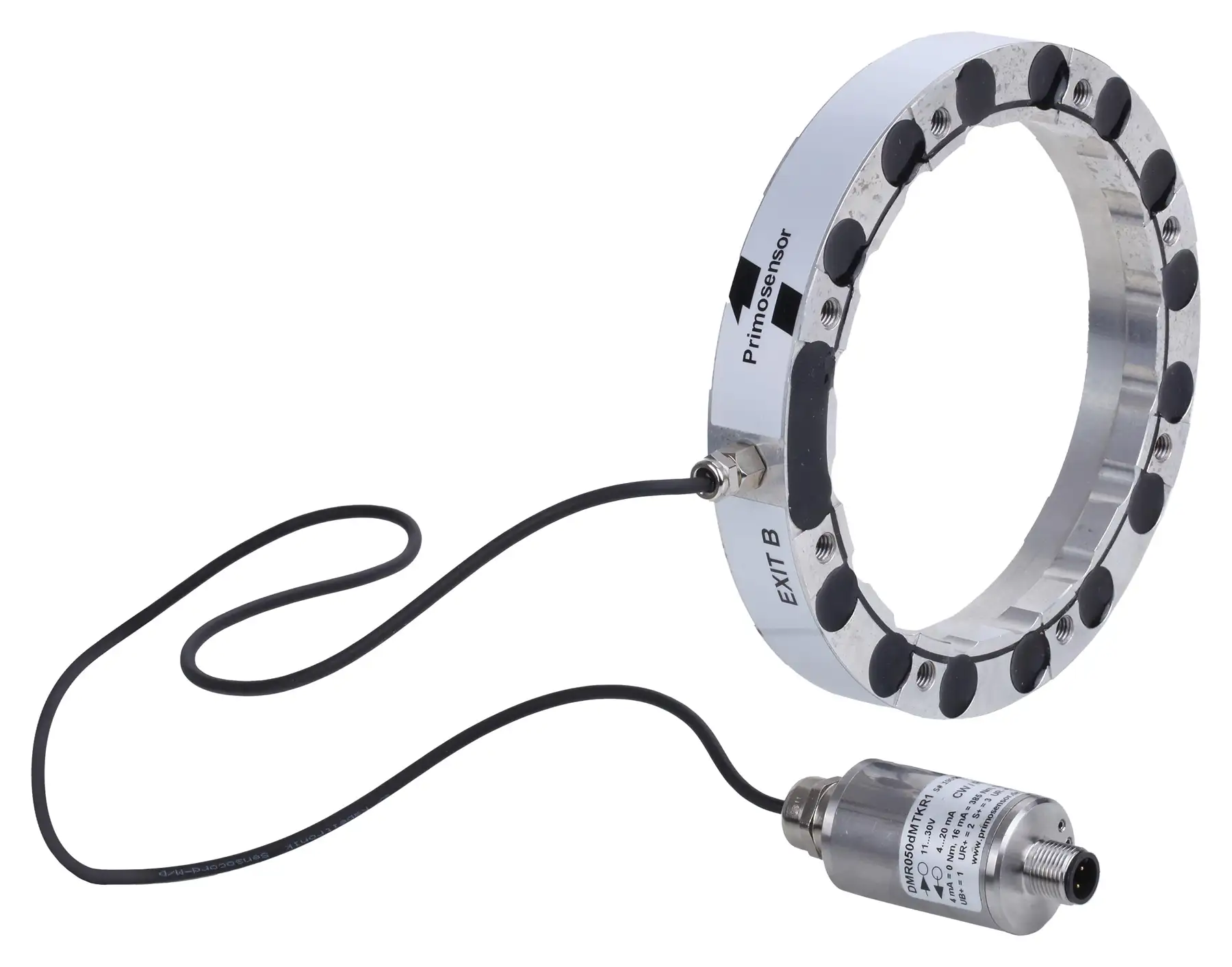
Torque measurement rings for static applications, available in three sizes for nominal torques ranging from 150 Nm to 3,600 Nm.
These torque measurement rings are available in four sizes—for nominal torques ranging from 150 Nm to 3,600 Nm. Thanks to their innovative design (sandwich structure), they are particularly well-suited for cost-sensitive applications in industrial measurement technology. The sensors are mounted between the drive component and the machine frame. They are static, meaning they do not rotate with the system. The sensors enable continuous measurement of the reaction torques of the drivetrain.
Torque transducers are mounted between the drive component and the machine frame, between the motor and the gearbox, or on the output side of the gearbox.
The mechanical deformation (shear)—caused by the torque—is converted into an electrical signal using strain gauges connected in a full Wheatstone bridge configuration.
The torque transducer has a load-proportional output signal.
The bridge's mV/V signal is converted to an industry-standard output signal via an integrated amplifier or an external cable amplifier.
Possible output signals include: 4…20 mA 2L / 3L, 4…20 mA 2L SIL (with an externally triggerable test signal for stage technology); 0…10 V 3L, ±10 V 3L, CANopen (complies with CIA 404 and CIA 301)
Standard measurement ranges between 0…100 Nm and 0…3600 Nm rated torque (others available upon request).
Very small linearity deviations of up to 0.3% of full scale
for static and dynamic applications in non-rotating systems
The measurement direction can be switched on the attached digital measurement amplifier with an analog output signal of 4...20 mA (2-wire; with or without SIL function).
The mounting of the torque transducer can be done either from two sides or from one side if accessiblity makes it necessary.
Very robust; high allowable ultimate longitudinal and transverse forces
Optional with factory calibration certificate
Due to the wide variety of motors and gearboxes, the thread hole patterns and rated torques vary across a broad range. Primosensor designs and manufactures the torque sensor that best meets your requirements.
Applications for Torque Sensors
Measurement of reaction torque in drive systems such as motor and transmission units
Die Präzision bewährter DMS-Kraftmesstechnik trifft ab sofort auf modernste, drahtlose Telemetrie und IoT-Intelligenz. Erleben Sie die Zukunft der industriellen Messdatenerfassung.